
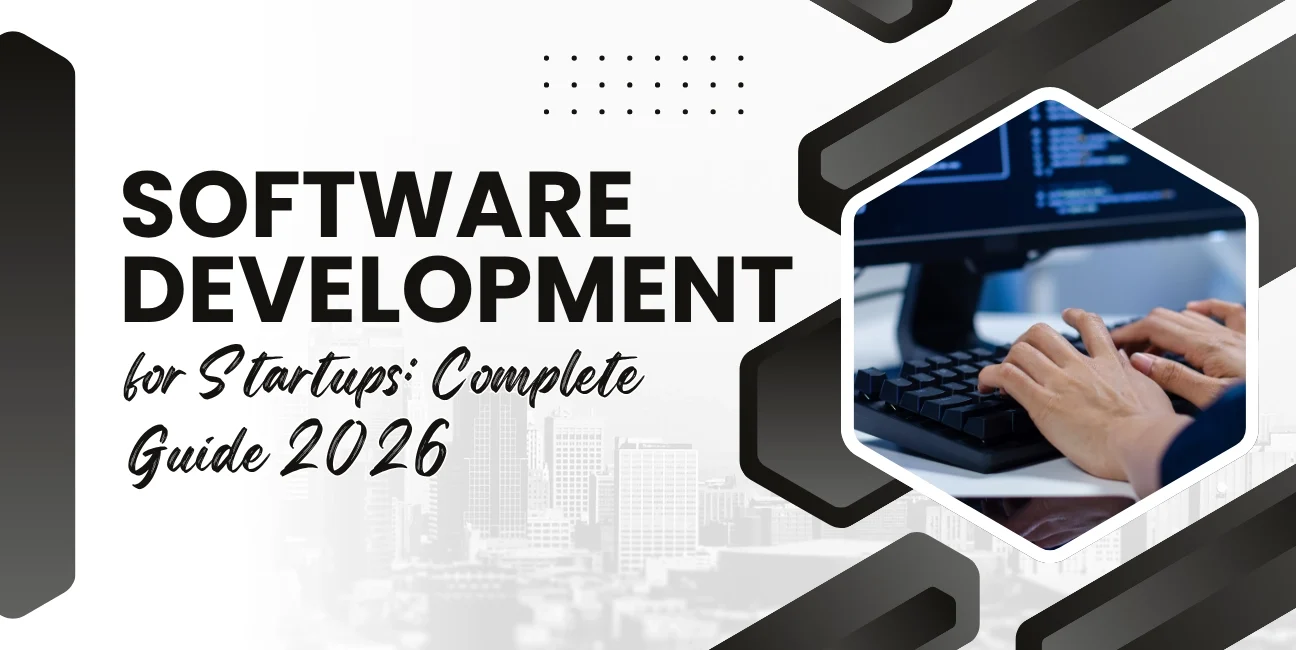
When launching a startup in 2026, it’s not enough to have a good idea – the execution of the idea based on a sound technology approach is key. Software Development for Startups has become the backbone of modern businesses, enabling founders to launch faster, scale smarter, and compete globally. No matter what type of product you’re going to create (SaaS, mobile application, artificial intelligence, etc.), the choice you make when it comes to software development will affect your growth.
In this guide, you will find all of the information you need about software development for startups, covering everything from planning an MVP to selecting a tech stack. By naturally including keywords such as “software” or “software development,” “custom software development for startups,” “MVP development,” and “startup tech stack,” this guide will help you rank and connect with your target audience.
Table of Contents
Why Software Development Matters for Startups
For new businesses, speed, adaptability, and low costs are very important. The Software Development for Startups project helps founders validate their concepts and adapt to the changing marketplace as quickly and easily as possible. Because of the uncertain nature of the business environment, new businesses must have a strong yet adaptable method of developing their products.
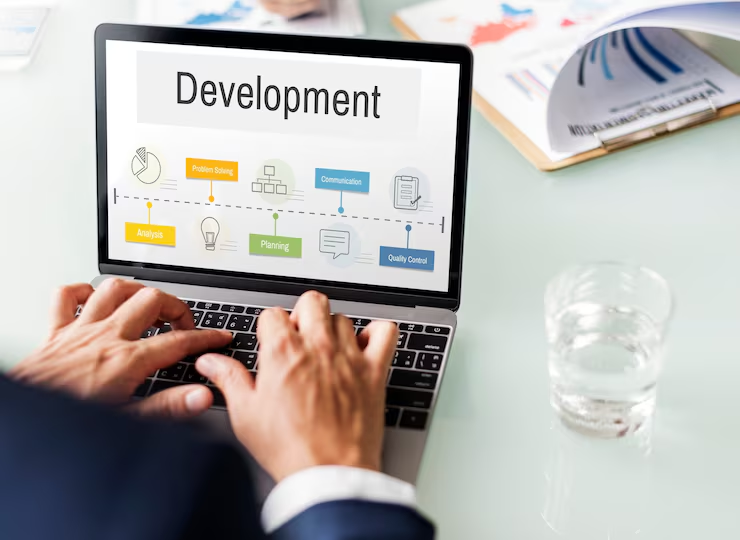
When you invest in custom software development for new businesses, you will be able to build your own solution rather than use a generic solution. In doing so, you will greatly improve efficiency and achieve a competitive advantage. Additionally, by engaging in agile development, you will be able to iterate quickly and receive better and more frequent feedback, allowing for continuous improvement.
New businesses that emphasize developing software that is both scalable and user-friendly early in their lifecycle tend to outperform their competitors. Whether you are developing a minimum viable product (MVP) or a fully functional platform, the development decisions you make have a direct impact on the end user experience, as well as user retention and revenue growth.
Step 1: Define Your Startup Vision and Goals
Before writing a single line of code, clarity is key. It is important to ensure that the business goals, the target audience, and the business problem being solved are clear. It is important to ensure that the business roadmap is clear to ensure the startup software development process is in sync with the business goals.
It is important to ensure that the business features and the unique selling point of the business are well understood. It is at this point that the importance of MVP development for startups is realized. It is important to ensure that the business is developed to the point where the main business problem is solved.
It is important to ensure that the business is developed using a structured approach to ensure that the costs and time involved in the development process are well managed. It is important to ensure that the business incorporates the software development planning for startups.
Step 2: Choose the Right Tech Stack
One of the most important decisions you make as a startup is the selection of the right tech stack. The tech stack is what makes your product work well, scale well, and cost less to maintain.
Popular options in 2026 include:
- Frontend: React, Vue.js
- Backend: Node.js, Django
- Database: PostgreSQL, MongoDB
- Cloud: AWS, Google Cloud
The selection is often determined by the product requirements as well as the expertise available within the team. For example, SaaS-based companies often look for scalable cloud-based technologies, while mobile-based companies often look for Flutter and React Native.
A good tech stack will enable scalable software development for startups, allowing you to create a product that will scale with you.
Step 3: Build an MVP (Minimum Viable Product)
Startups must get moving quickly, which is why MVP development is so important. An MVP will help you test your idea with customers and keep costs and risks low.
When you build an MVP, focus on just the core features that solve the biggest problem for your target market. Don’t add any additional features in the beginning, so that your “lean” software development methodology becomes an integral part of your startup’s software development strategy.
Benefits of MVP development:
- Faster time to market
- Early user feedback
- Reduced development costs
- Improved product-market fit
By using agile development for startups, you can continuously improve your MVP based on user feedback and market trends.
Step 4: Choose the Right Development Approach
There are several Software Development for Startups strategies, and the strategy to use depends on your budget, schedule, and expertise.
In-House Development
Building an internal team gives you full control over your project. It’s ideal for startups with long-term development needs but can be expensive.
Outsourcing
Outsourcing your custom software development needs for startups is a cost-effective strategy, and startups can leverage expert developers’ services.
Hybrid Model
Having a mix of internal and outsourced teams is a strategy that gives you flexibility and scalability, which is efficient in software development for startups while still ensuring quality.
Each method has its pros and cons, so evaluate your needs carefully before making a decision.
Step 5: Focus on UI/UX Design
User experience is a vital element in determining the success of any startup venture. Even if you have great technology, your startup will still fail if users are not able to use your product.
Investing in a good user interface/user experience will result in higher user engagement and retention. Modern software development for startups focuses on user-centric design principles.
Key elements to focus on:
- Simple navigation
- Fast loading speed
- Mobile responsiveness
- Clean and modern interface
Having a good design will not only make your product more usable, but it will also give a boost to your brand image, making your product more attractive to users.
Step 6: Implement Agile Development
Agile development for startups is the most preferred methodology in 2026. This is because agile development allows for short development cycles. This helps in adapting to changes and making updates to the application quickly.
Agile benefits include:
- Faster development cycles
- Continuous feedback
- Improved collaboration
- Reduced risks
By following agile development methodologies for your startup’s software development process, you are able to maintain a flexible process and develop high-quality products.
Find the right digital marketing agency for startup with proven strategies, transparent reporting, and scalable solutions designed to drive growth, increase ROI, and build long-term brand success.
Step 7: Ensure Scalability and Security
Your startup’s software needs to support more traffic and data from its growth, and thus, it is critical to implement scalable software development for startups in your software from the outset.
Focus on:
- Cloud-based infrastructure
- Modular architecture
- API-first design
In addition, security features are important for protecting your users’ data, and therefore must be integrated into your software through strong security measures such as encryption, authentication, and regular audits.
Striking the balance between scalability and security ensures that your software will be stable and trustworthy in the future.
Step 8: Testing and Quality Assurance
Testing is one of the important aspects of Software Development for Startups. Without proper testing, your product may face problems like bugs, crashes, etc.
Types of testing include:
- Unit testing
- Integration testing
- Performance testing
- User acceptance testing
A good quality assurance process is necessary to make sure your application is stable and works smoothly in different environments. It is also necessary for maintaining a good brand image.
Step 9: Launch and Marketing Integration
Once you have your product ready, you can proceed to launch it. However, your development process is not complete here; marketing is equally important in your success.
Integrate your product with marketing tools like:
- Analytics platforms
- CRM systems
- Email marketing tools
The blend of software development in startups and marketing techniques is essential in getting more visibility and users for your product. Launching a successful product is a two-part process.
Step 10: Continuous Improvement and Scaling
The journey does not stop after launch. Continuous improvement is also a key to staying competitive. Use user feedback and analytics to improve your product.
Focus on:
- Adding new features
- Improving performance
- Fixing bugs
- Scaling infrastructure
By following software development best practices for startups, you can ensure long-term success and growth.
Common Mistakes to Avoid
Many startups fail due to avoidable mistakes in their development process. Here are some common pitfalls:
- Overbuilding without validation
- Choosing the wrong tech stack
- Ignoring user feedback
- Poor project management
- Lack of scalability planning
Avoiding these mistakes ensures a smoother startup software development journey and better outcomes.
Future Trends in Startup Software Development (2026)
The field of Software Development for Startups is changing rapidly. Keeping yourself updated with the latest trends can help you gain a competitive advantage.
Key trends include:
- AI-powered applications
- Low-code and no-code platforms
- Cloud-native development
- Blockchain integration
- IoT-based solutions
These innovations can help you improve your product and open up new business opportunities.
Frequently Asked Questions (FAQs)
1. What is Software Development for Startups?
Software Development for Startups is the process of designing, developing, and maintaining software applications designed to support startups. It is the process of building applications to support startups, focusing on the speed, scalability, and cost-effectiveness required to support startups.
2. Why is MVP development for startups important?
MVP Development for Startups is the process by which startups can develop the minimum viable product with the aim of launching the product with the essential features.
3. How do I choose the best startup tech stack?
The choice of technology for startups should align with your product’s objectives, scalability needs, and team expertise. React for the frontend, Node.js for the backend, and Amazon Web Services for cloud hosting are popular options because they support flexibility, performance, and ongoing support, which are crucial for startup success.
4. Should startups choose custom software development for startups or ready-made solutions?
Custom software development is recommended for startups requiring specific features and scalability, as it offers tailored solutions. For quick deployment and cost savings, off-the-shelf solutions may suffice. Startups aiming for long-term growth should consider investing in custom software to better meet their evolving needs.
5. What is the role of agile development for startups?
Agile development for startups allows startups to develop software in short iterations. Highlighting this can help teams feel capable and adaptable, as agile methods help cope with changes, resolve problems, and improve the software continuously.
6. How much does startup software development cost in 2026?
The cost of developing the startup software can differ depending on the level of complexity and the features required. An MVP can cost anywhere between $10,000 to $50,000. Outsourcing can also reduce costs without compromising quality.
Conclusion
In 2026, software development for startups will focus heavily on speed, scalability, and smart decision-making. Every step – from defining the vision to launching the product and scaling it – is crucial to the success of your startup.
With creative strategies for developing startup software, focusing on MVP development, and using agile development for startups, you can create a product that not only meets users’ needs but also shines in an overcrowded market.
Remember that developing software is merely a means to an end; the end goal is to create a solution that triggers growth, provides value and adapts to your startup’s changing demands.